How to Keep Your Credit Card Safe When You Pay Over the Phone
Paying by credit card over the phone is safe if you follow a few simple steps. People do it every day for catalog orders, doctor bills, insurance payments, and donations.
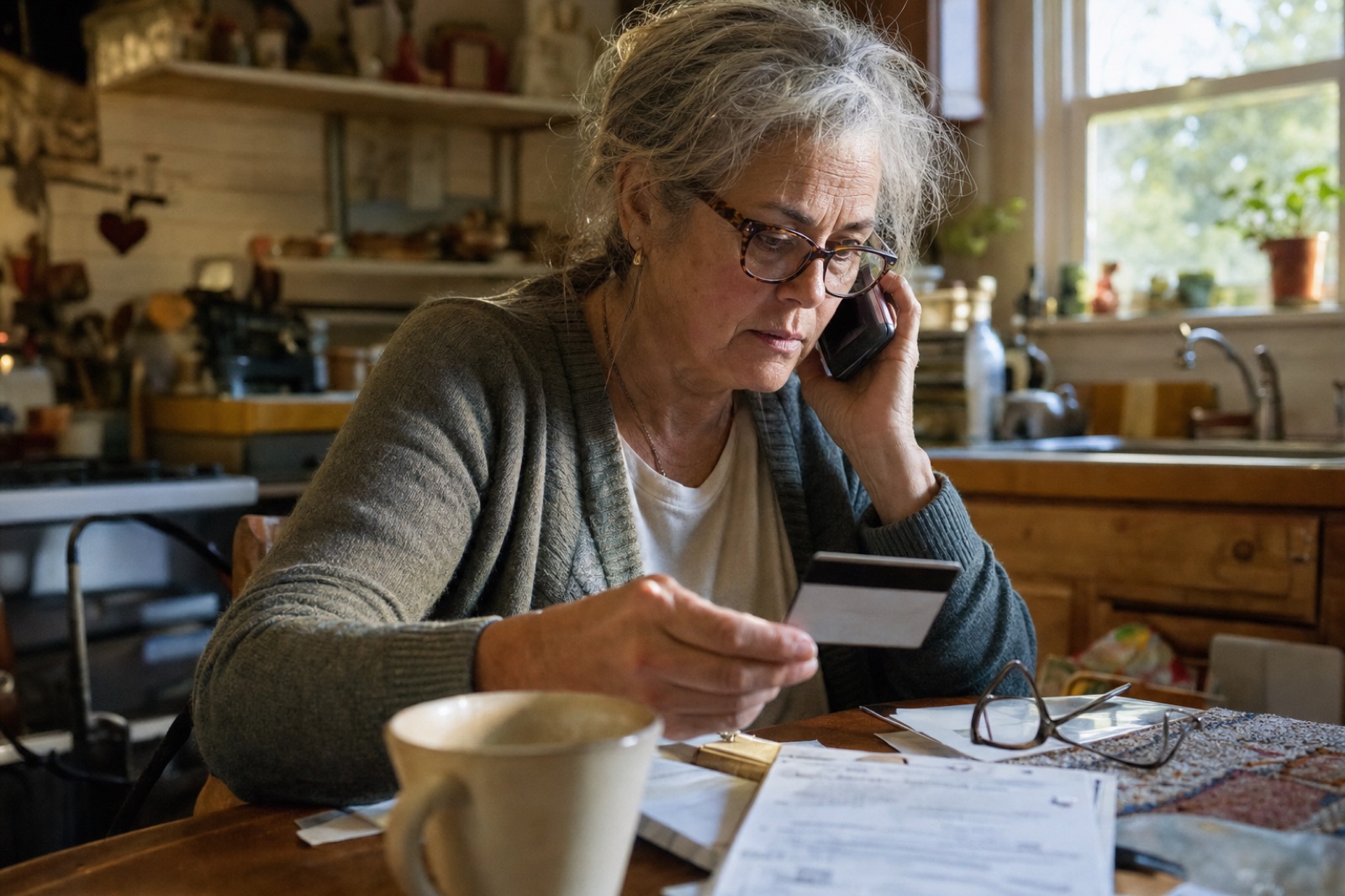
1. Be the one who makes the call
A phone payment is safest when you place the call yourself. If someone calls you and asks for your card number, hang up. Then look up the company's number on your bill or on its website, and call that number instead.
Scammers can fake the name and number on your caller ID. If the caller claims to be your card company, use the number on the back of your card. The Federal Trade Commission says the same: do not use the number the caller gave you.
2. Give only what the company needs to charge your card
To charge your card, a company needs the card number, expiration date, and security code. The code is three digits on the back of most cards, or four on the front of an American Express. The company may also ask for your billing ZIP code or the name on the card. Both are normal.
Never give your PIN or your full Social Security number. No honest company needs those to take a payment. If a caller pushes for either one, hang up.
3. Type your card number on the keypad if the company offers it
Some companies let you type your card number on the phone keypad instead of saying it out loud. Take that offer every time. Their system replaces the beeps your keys make with a flat tone, so the person on the line never hears your number. If they do not offer it, ask: "Can I type the number in instead of reading it?"
4. Ask if the call is recorded
Many companies record their calls, and a card number read out loud can sit in a recording for years. Before you pay, ask: "Is this call recorded?" and "Does my card number stay in the recording?" If your number stays, or the agent does not know, ask to pay online or by mail.
Visa and the other card networks set rules for call centers that record card payments. Companies that follow those rules remove card numbers from their recordings.
5. Check your statement
Look at your card statement about a week after the call. If you see a charge you do not recognize, call the number on the back of your card and say: "I want to dispute a charge." Federal law caps your loss at $50, and most card companies drop that to zero when you report the problem.
That $50 cap is also why a credit card beats a debit card for phone payments. With a debit card, the money leaves your bank account right away, and you wait while the bank investigates.
The short version
- Call the company yourself, using a number you looked up.
- Pay with a credit card, not a debit card.
- Give only the card number, the expiration date, and the security code. Add the ZIP code only if they ask for it.
- Type your card number on the keypad when you can.
- Ask whether the call is recorded, and whether they remove your card number.
- Check your statement about a week later, and dispute any charge you do not recognize.